Seven Insights From The Use Of AI Sales Companion In An Enterprise

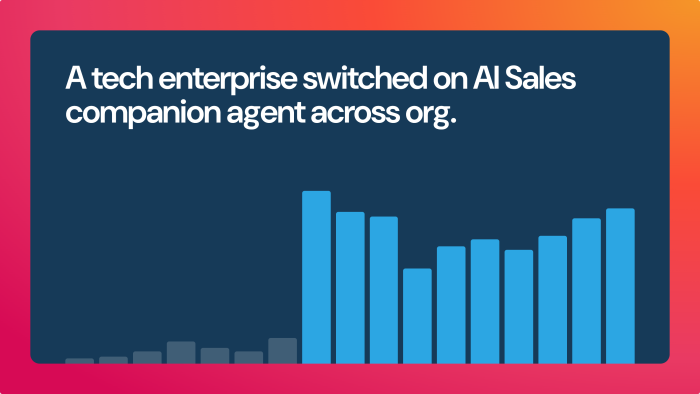
This analysis of a 90-day post-rollout case study reveals that successful adoption relies on a phased rollout strategy, prioritizing user habit formation within the first two weeks, and empowering power users as key evangelists. The data indicates that achieving repeated user sessions early is the critical milestone for long-term retention and effective AI-driven sales enablement.
Key Takeaways
A phased rollout strategy is essential, as it allows for an initial beta period with the enablement team to fix early issues and build confidence before a full organization-wide release.
Adoption is driven by the nature of the work rather than the organizational chart, with desk-based roles like inside sales and SDRs showing higher usage, while field reps require more specialized use cases to effectively adopt the tool.
Seniority does not predict adoption, as individual contributors, managers, and directors demonstrate nearly identical rates of engagement and long-term usage.
Adoption is heavily concentrated, with 50 out of 358 users driving 68% of all activity; these power users serve as your key evangelists, and engaging with them to identify their reused prompts is an effective way to drive broader adoption.
Habit formation occurs at the fourth session, as reaching this milestone within the first two weeks results in a 97% retention rate over the subsequent three months.
Half of all seller queries are dedicated to basic product knowledge and content retrieval, but the assistant only earns the trust required for advanced tasks like creating deal-specific content once those fundamentals are proven reliable.
AI shifts the burden of accuracy from the sales representative to the vendor, as synthesized answers mean the responsibility for correctness lies with the information provider rather than the individual selecting a file.
Over four months ago, an enterprise tech company switched on AI Sales Companion (AI chatbot by Enablix) across its organization: roughly 300 reps plus marketing, enablement, and customer success teams.
This article contains first-hand product analytics insights from the first 90 days that followed.
How was adoption over time?
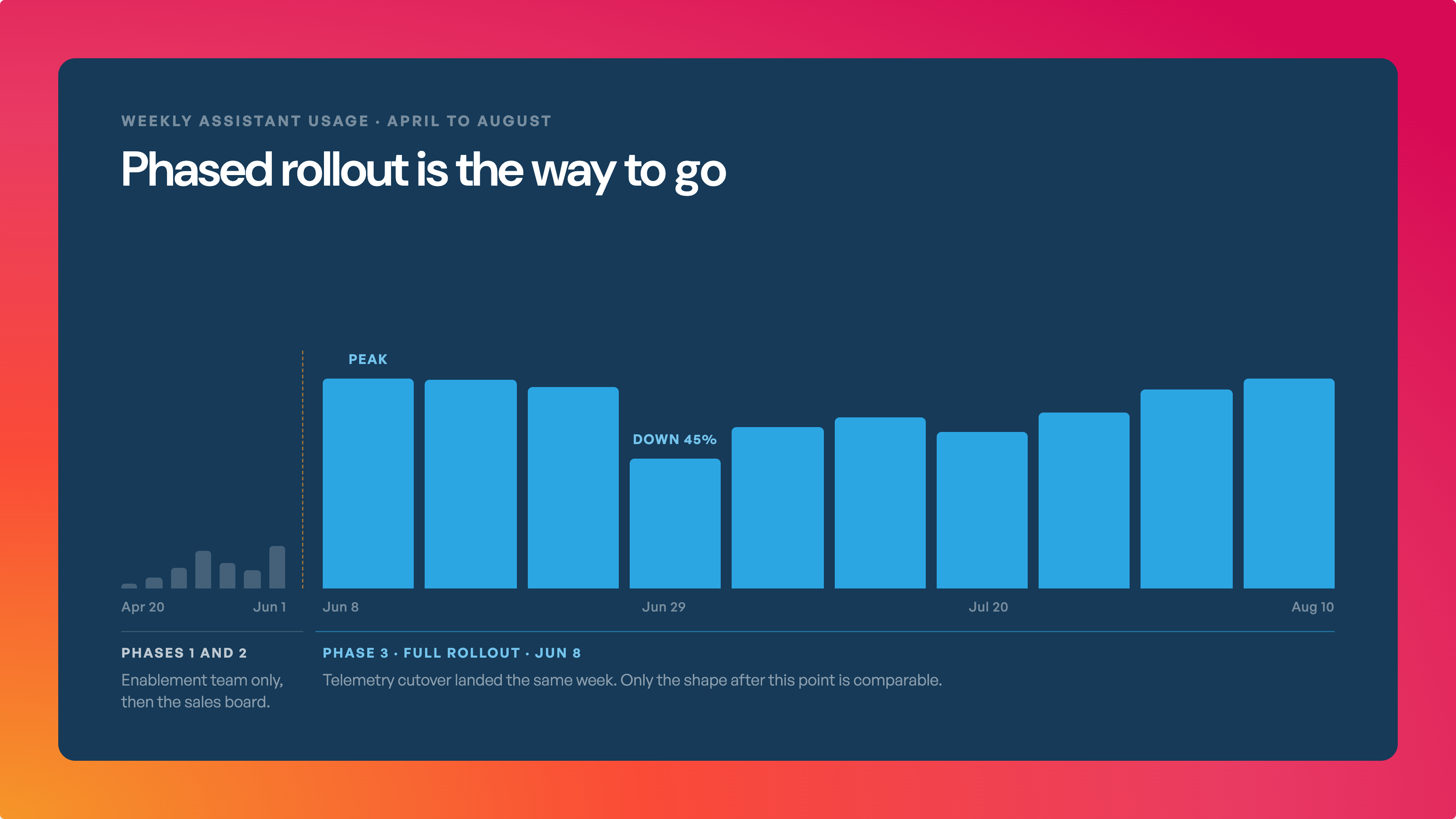
The rollout ran in three phases. The chart captures all three.
Phase 1. Enablement team only. Late April to early June.
This was the early beta where a small group used the Sales Companion on real work, gave tight-knit detailed feedback, improved the sales companion and made sure early issues were fixed. No rep had access yet.
Phase 2. The board. Early June. Six weeks of internal usage gave the team a working demo and the conviction needed to pitch it to the sales board and let them test it out.
Phase 3. Full Rollout. June 8. This is when the Sales Companion was rolled out to the entire GTM organization.
The two weeks after rollout were the highest volume of the entire period. Then usage dropped to 55% of that peak by late June.
The bump came from the rollout event. The announcement, the mandate, the manager nudge, plain curiosity. You will get it whether the Sales Companion is good or not.
What brings them back
Usage recovers through July and climbs into August. Two things crucial to drive that.
Accuracy: A rep who gets a wrong answer on a live deal does not come back. No amount of communication fixes that. This is why the enablement only phase matters. It is where you find the failure modes, in front of people who are paid to be patient with them.
Internal push: Naming reps who are using Sales Companion and getting real value, creating and sharing resources like common prompt library.
How was adoption across departments?
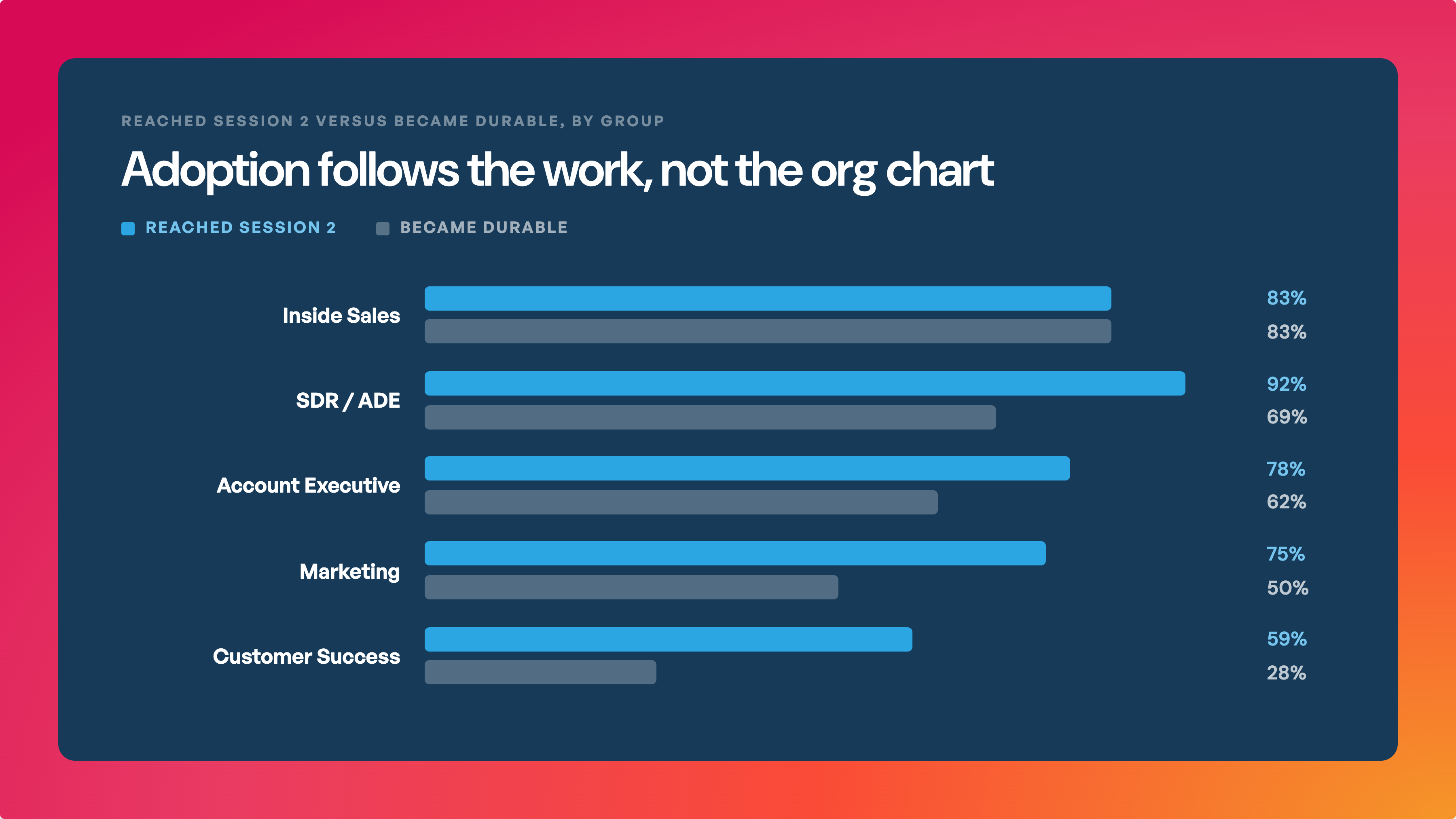 Adoption was not even across teams. It followed the nature of work
Desk based roles like Inside sales and SDR write a lot, and they iterate on similar copies repeatedly. That is where the Sales Companion shines. Field reps are in meetings, on the road, and their job is relationship led. For them the Sales Companion needs to solve more use cases like creating one pager, creating battle card on fly for them to increase adoption.
How was adoption across seniority?
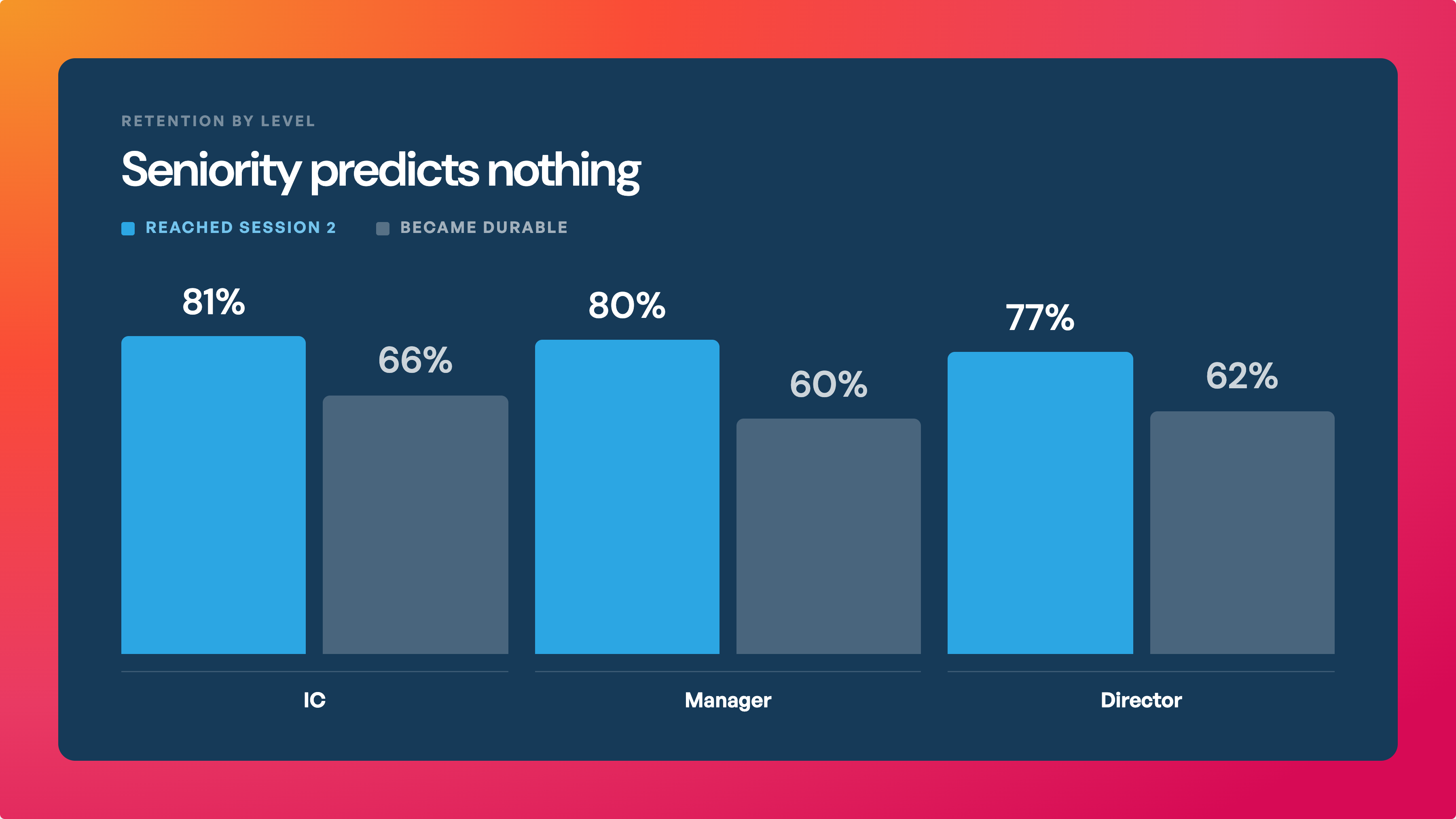 There was no meaningful variance across seniority. ICs, managers, and directors reach a second session at 81%, 80%, and 77% respectively, and become durable at 66%, 60%, and 62%. Roughly four in five who started came back, and roughly six in ten stuck, whatever their level.
How was adoption between power users vs. regular users?
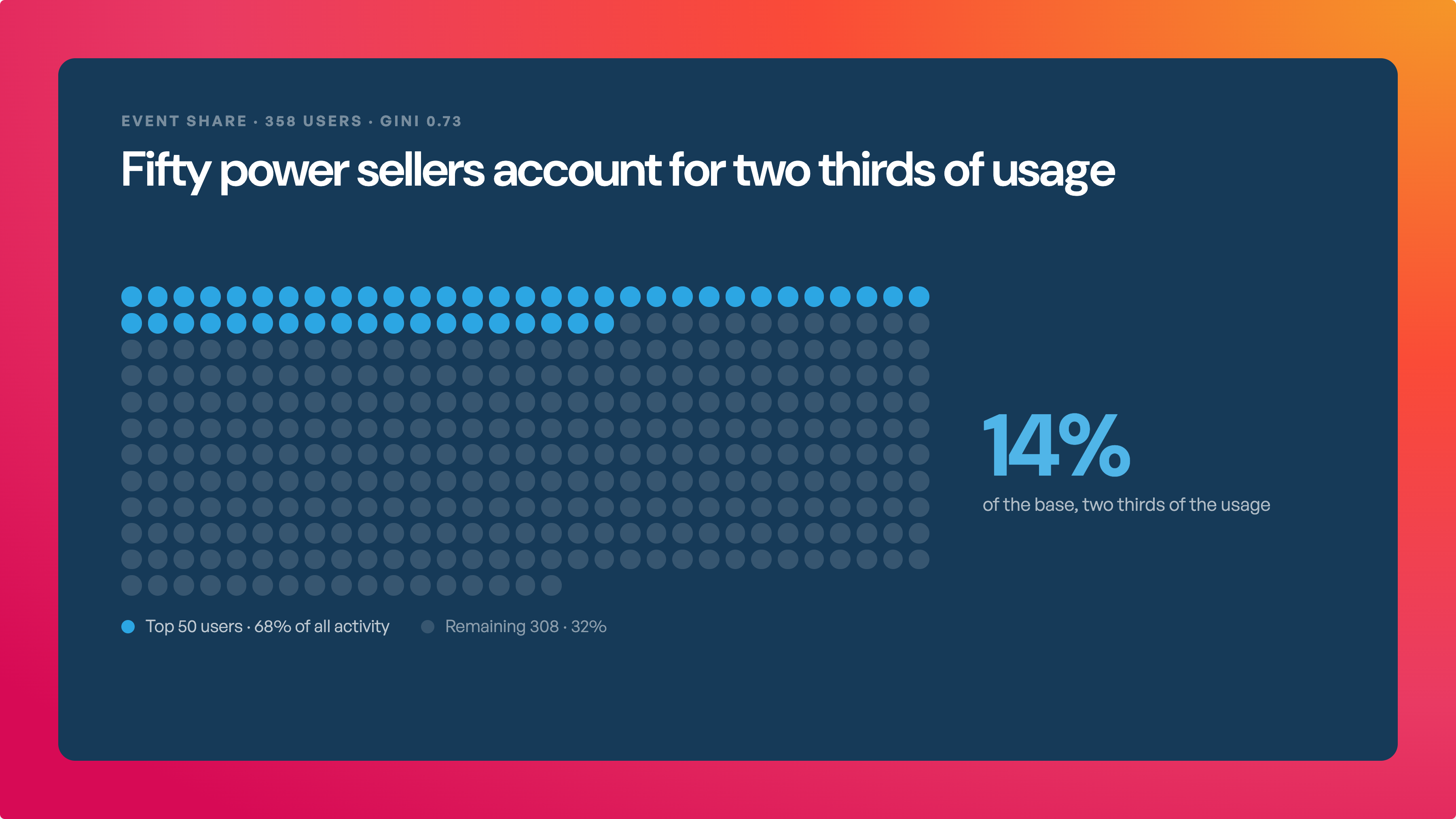 Adoption was truly power user driven. 50 users out of 358 account for 68% of all activity.
The key insights is to make those top power sellers your evangelists. They are the ones who are getting value and embedding AI in all their workflows. Interview ten of them, find the handful of prompts they reuse, and ship those to everyone else.
Peer sharing is the most effective way to keep others hooked and drive adoption.
When did habit form?
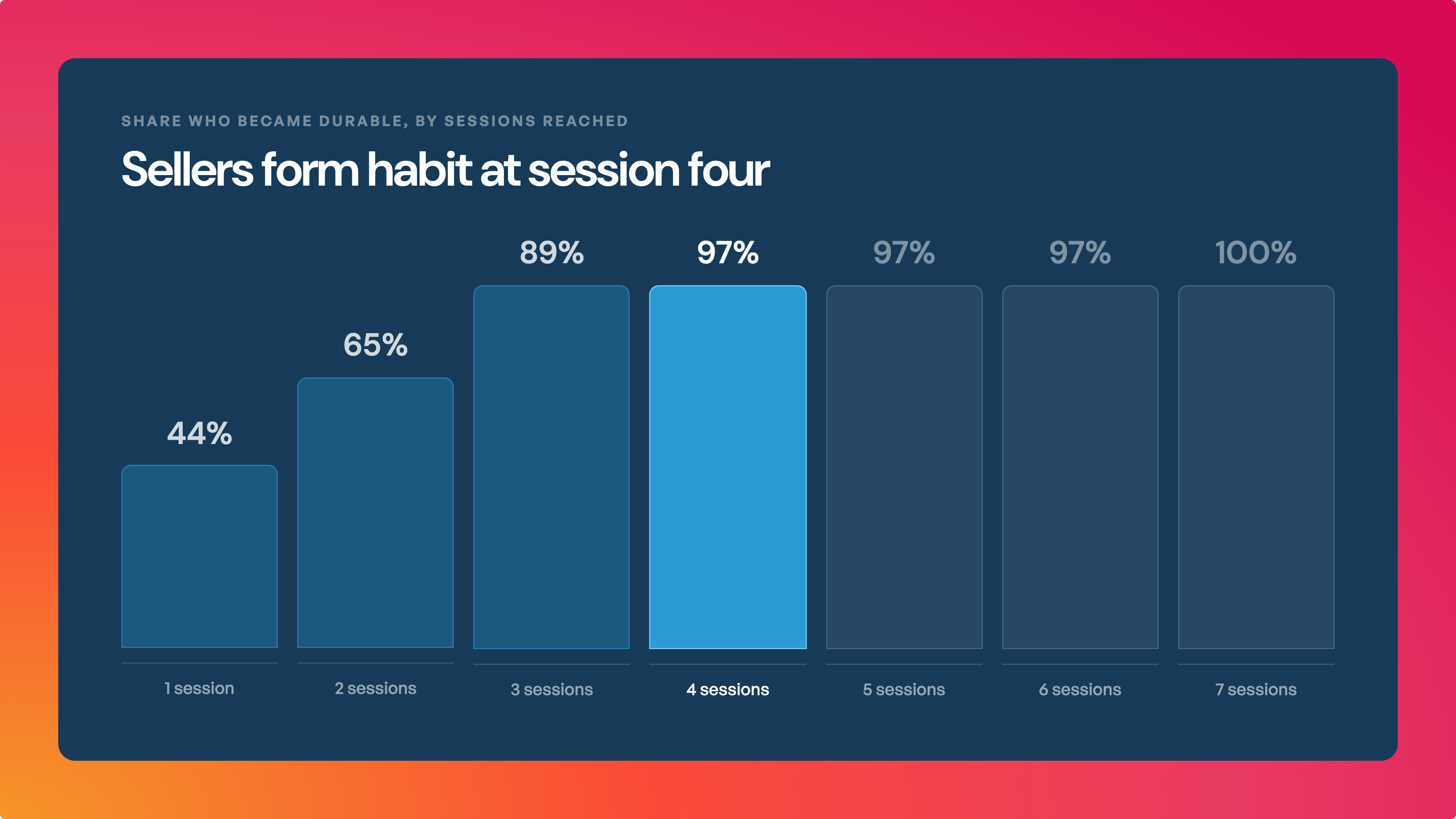 The fourth session is where the habit truly gets formed
One session: 44% seller retained across 3 months
Two sessions: 65% seller retained across 3 months
Three sessions: 89% seller retained across 3 months
Four sessions: 97% seller retained across 3 months
Get a rep to four sessions inside their first two weeks and they are still there three months later. Miss it and they are gone.
So onboarding needs to have primarily one target. Figure out after which particular session you convert experimenters to power users and Four sessions per user in the first two weeks. Your training, your launch comms, your manager conversations and your reminder campaigns should all point at that one number.
What questions did reps ask?
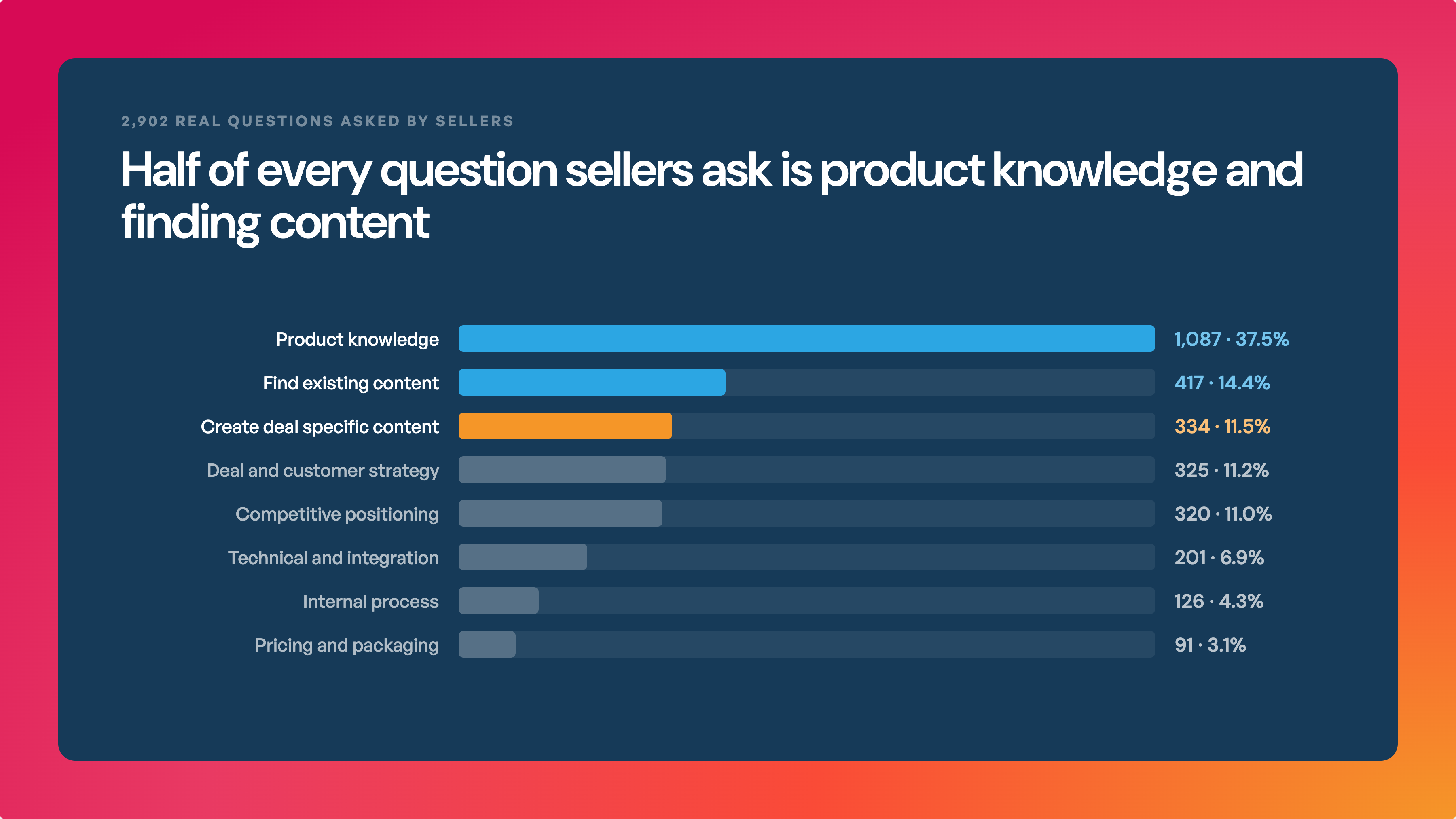 1. Half of the questions are exactly what you would guess: “How do we help CMOs in reducing costs?” (product information from content) and “Where is this pitch deck I need?” (to discover the content).
2. The part that was hard to predict: 12% was downstream work, work where a rep wants the Sales Companion to create a deal-specific document (one-pager, pricing guide) inside itself. But there is a pattern hidden underneath: reps get to create deal-specific content once the other half works reliably. When the “How do we help CMOs in reducing costs?” question returns the right answer, then the Sales Companion earns the trust to build the one-pager that gets sent to the CMO for that specific deal.
Sales Companion is always only as good as how well your content is organized underneath; it gates everything above it.
Who owned accuracy when AI answered the reps?
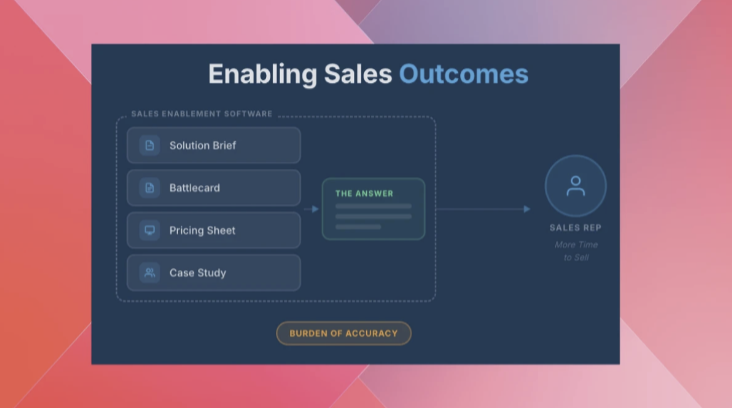
Traditional search based systems used to burden the reps with extracting the correct information and let the vendors and stakeholders off the hook. These systems would serve rep with twenty files and rely on the rep to figure out how to use any of those files to get the job done.
Seeing reps questions and answers from the Sales Companion, it is evident that the burden of accuracy is now on the vendors and the enablement stakeholders. The success metric has stopped being search relevance and has became answer accuracy.
We have talked about this in another post. → Read: Why AI shifts liability from reps to vendor
Sales Enablement Content to Sales Enablement Outcomes
In an industry tired with content slop, AI can help deliver sales enablement outcomes
Deliver Sales Enablement Outcomes